Explain the Different Fields of an Ip Packet Header
IPV4 header format is of 20 to 60 bytes in length contains information essential to routing and delivery consist of 13 fields VER HLEN service type total length identification flags fragmentation offset time to live protocol header checksum source IP address Destination IP address and option padding where each has its own features and provides essential data. The Flags field is used to control how a specific IP packet is treated by a device.
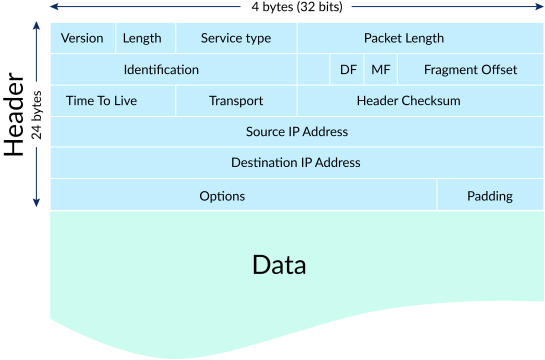
Ip Packets Article The Internet Khan Academy
If the value reaches zero the packet is discarded.
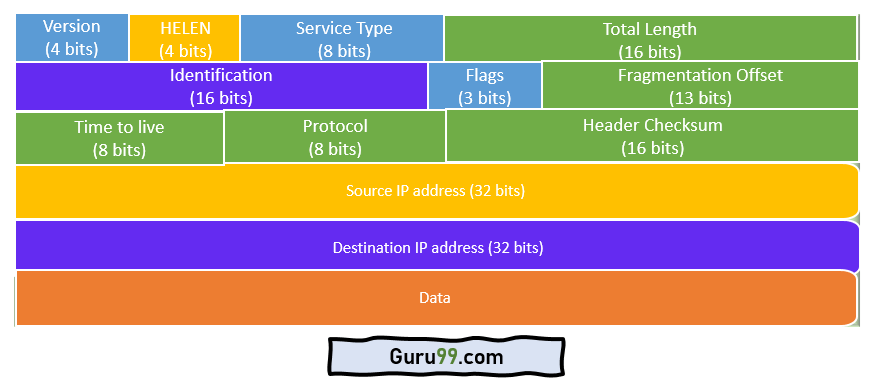
. The different fields of an IPv4 header are Version IHL Type of Service Total Length Flags Fragment offset TTL Time to Live Protocol Header Checksum Source IPv4 Address Destination IPv4. IP packet encapsulates data unit received from above layer and add to its own header information. That new packet is called a header.
All of these message have a common header that is sent to there BGP. 11 BGP HeaderFormat. This is a new concept introduced in IPv6.
Precedence The first three bits are for precedence. This field indicates the IPv6 address of the intended recipients of this packet. The field called Next Header 8 bits specifies the header type like an upper layer protocol header or IPv6 extension header.
IPv4 packet is made up of a header and a data section. It is used on packet-switched Link Layer networks such as Ethernet. The field is 3 bits and is formatted as follows.
9 rows Next Header 8-bits. IPv4 - Packet Structure. It is used to define the IP version.
Internet Protocol being a layer-3 protocol OSI takes data Segments from layer-4 Transport and divides it into packets. It contains information need for routing and delivery. This is same as TTL in IPv4.
They encode with different type of message from the five types of messages function used to establish maintain and update the neighbour relationship notify and formatting errors about the peer router of BGP. IPv4 uses the best effort delivery method which does not provide a guarantee of delivery. The minimum value for this field is 5 and the maximum is 15.
This field specifies the IPv6 address of the sender of the packet. Low Delay High Throughput Reliability 8 bits. IP header length 4 bits which is the number of 32 bit words in the header.
The next 8 bits are then reserved. 143 rows You have learned Internet Protocol Version 4 IPv4 Internet Protocol Version 4 IPv4 Datagram Header different fields in an IPv4 header and IPv4 Datagram fragmentation. The extension header mechanism is a very important part of the IPv6 architecture.
The next 8 bits are then reserved. The size of BGP message format is 32 bit long. The size of this field is 8 bits.
The value 4 defines the packet as IPv4 while value 6 defines the packet as IPv6. The minimum use of the IP header is 20 bytes consisting of five 32 bit words. This header contains fourteen fields.
The type of service is an 8 bits header field each bit has a meaning for quality of service. A Version 4 bit. IP Header is meta information at the beginning of an IP packet.
B Header length 4 bit. Precedence means the priority of an IP packet in case. The next Header field of IPv6 fixed header points to the first Extension Header and this first extension header points to the second extension header and so on.
How many bytes are in the payload of the IP datagram. The 13-bits field Fragment Offset is used in a similar way as IPv4. It displays information such as the IP version the packets length the source and the destination.
It is used to define the length of the header. This field is used to stop packet to loop in the network infinitely. Within the IP packet header what is the value in the upper layer protocol field.
IPv6 packet may contain zero one or more extension headers but these should be present in their recommended order. This is also a difference between IPv4 and IPv6 Header. The type of service in the Ip header is for controlling the quality of service of Internet Protocol packet traffic.
The packet datagram header is as shown below. IPV4 header format is 20 to 60 bytes in length. IPv4 Datagram Header Size of the header is 20 to 60 bytes.
It consists of 13 fields such as Version Header length total distance identification flags. Version of the IP protocol 4 bits which is 4 for IPv4. Explain how you determined the number of payload bytes.
The value of the upper layer protocol field is ICMP 0X01 3. It does not include the data field and the value. The second bit represents whether a packet is allowed to be fragmented Dont FragmentmdDF or split into multiple pieces.
The values for the type of Upper Layer PDU are same as IPv4s. With Quality of service a network may choose how to handle the packets. IPv4 Internet Protocol version 4 is the fourth version of the Internet Protocol IP.
IPv4 header has a field called TTL to indicate the number of hops while IPv6 header has filed called hop limit to indicate the number of hops. When transmitting data the original data is added with extra information. Source Address the IP address of the original sender of the packet Destination Address the IP address of the final destination of the packet Options not normally used but when used the IP header length will be greater than five 32-bit words to.
The header contains information about IP version source IP address destination IP address. The first bit is always set to 0. An IP header is header information at the beginning of an Internet Protocol IP packetAn IP packet is the smallest message entity exchanged via the Internet Protocol across an IP networkIP packets consist of a header for addressing and routing and a payload for user data.
How many bytes are in the IP header. This field is used to indicate either the type of Extension Header or if the Extension Header is not present then it indicates the Upper Layer PDU.
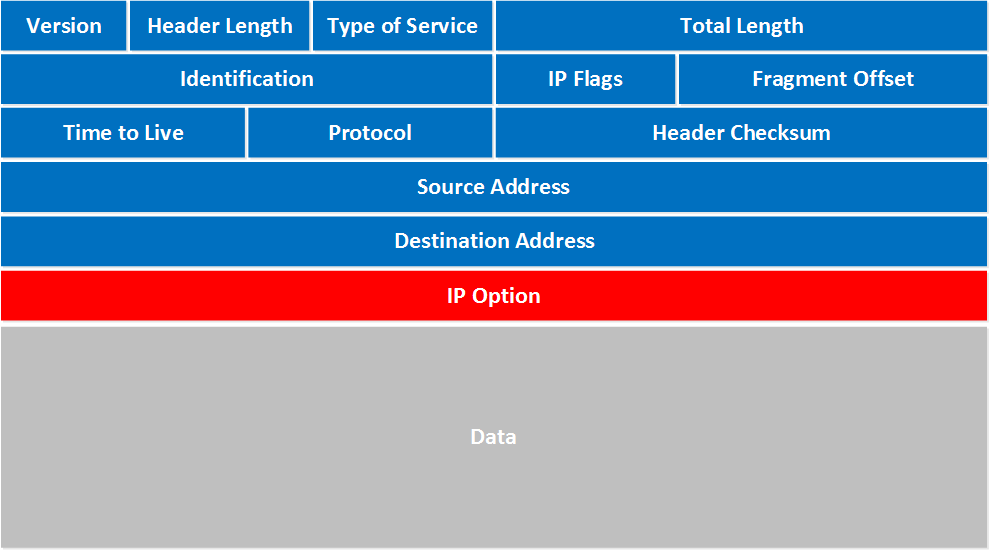
Ipv4 Packet Header
Ip Packet Header Format Fields

Iv4p Packet Header


Comments
Post a Comment